.jpg)
Blogs
Camping Tent Materials: A Buyer's Guide to Fabric, Poles, and Coatings
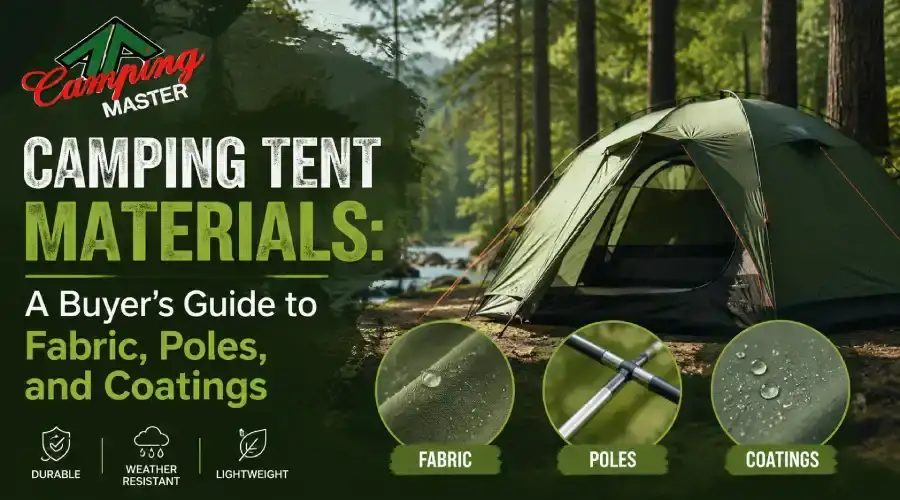
Camping tent materials decide how a tent holds up in the field, how much it costs, and how happy your customers stay after the sale. Buyers who order tents in bulk cannot rely on a photo or a sample alone. Fabric type, denier, coating, and pole alloy each change how a tent performs in rain, wind, and sun. This guide walks through the materials used across the camping tent industry, drawn from years of sourcing conversations between manufacturers and wholesale buyers, so you can ask sharper questions and avoid costly return rates.
Why Camping Tent Materials Matter for Buyers
A tent built for a mild weekend trip will not survive a week-long event in wind and rain. Buyers who supply outdoor retailers, event companies, or rental fleets need to match the material to how the tent will actually be used. Choosing the wrong camping tent materials for a market leads to returns, warranty claims, and complaints that hurt a brand's reputation. Reviewing these specifications before placing an order gives buyers a stronger position when negotiating with suppliers, because they can ask for exact numbers instead of accepting general marketing claims.
Important Tip
Choosing the right camping tent depends on the weather conditions, group size, and durability you need for outdoor trips. At Xinxiang Camping, we manufacture tents built to handle real-world use across all seasons.
Request a Quote for Camping TentCommon Tent Fabric Types of Camping Tent
Polyester Camping Tent
Polyester is the most widely used tent fabric because it is durable, weather resistant, and affordable. It resists UV rays better than nylon, which makes it a solid choice for tents that will sit in direct sun for long periods. Polyester also absorbs less water than nylon and holds its shape better in extended rain, which is why it appears so often in family camping tents and general-use products.
Nylon Camping Tent
Nylon is common in backpacking and ultralight tents because it offers a better strength-to-weight ratio than polyester. The tradeoff is that nylon stretches slightly when wet, which can loosen a tent's shape during heavy rain. Nylon usually costs more than polyester at a similar weight, but buyers serving backpacking or expedition markets often accept the price difference because their customers value the weight savings more than the cost.
Canvas Camping Tent
Canvas offers strong durability and natural airflow, which makes it a common choice for glamping setups, long-stay campgrounds, and rental fleets that need a tent to survive repeated use. Canvas needs more upkeep than synthetic fabrics, including periodic reproofing to keep its water resistance. Buyers positioning canvas product lines should plan to explain this maintenance step to their own customers.
Fabric Weight and Denier Explained
What Denier Means
Denier measures the thickness of the fibers used to weave a fabric, based on the weight of the yarn per unit length. Camping tent materials generally range from about 20D for ultralight backpacking tents up to 300D or higher for heavy-duty family and expedition tents. As a general rule, a higher denier number means a heavier and more abrasion-resistant fabric, though the exact relationship depends on the fiber type and weave.
Matching Denier to Product Type
Buyers should always confirm denier specifications with the manufacturer for each product line rather than assuming a single number applies across a whole catalog. Lightweight backpacking tents in the 20D to 40D range are built to save pack weight, so they trade off some abrasion resistance. Family camping tents in the 150D to 300D range are built for repeated setup on different terrain, where durability matters more than shaving off grams. Matching camping tent materials to the buyer's target market, rather than picking the cheapest denier available, reduces the chance of early product failure in the field.
Camping Tent Sourcing: Platform Comparison
Waterproof Coatings and Ratings
Polyurethane (PU) Coating
Polyurethane, or PU, is the most common waterproofing treatment applied to the underside of tent fabric. It performs well when new, but its waterproofing ability breaks down gradually with prolonged UV exposure, so buyers should ask suppliers about the expected service life of the coating under real sun conditions, not just a lab test result.
Silicone Coating
Silicone-coated fabric, often called silnylon or silpoly depending on the base material, resists UV damage and tearing better than PU-coated fabric. Silicone coatings cost more to apply, which places silicone-coated tents at a higher price point than standard PU-coated products. Buyers targeting premium or expedition-grade markets often justify this cost with longer product life and fewer warranty claims.
Hydrostatic Head Ratings
Hydrostatic head measures waterproof performance in millimeters. Most camping tents fall between 1500mm and 3000mm, while expedition or heavy-rain tents can exceed 5000mm. Ask your supplier for hydrostatic head figures on both the fly and the floor, since manufacturers frequently use different fabric blends for each and the two ratings can differ meaningfully.
Breathability and Mesh Materials
Mesh Panel Types
Mesh panels improve airflow and reduce condensation buildup inside a tent. Common types include no-see-um mesh and no-fly mesh, both designed to block small insects without blocking air movement. Buyers sourcing for warm or insect-heavy regions should confirm mesh density with the supplier before placing an order.
Balancing Airflow and Weather Protection
More mesh means better airflow but less protection from rain and cold. Manufacturers adjust the ratio of mesh to solid fabric based on the season rating they are targeting: three-season tents typically use more mesh, while four-season tents use more solid fabric to hold up against wind and snow. Buyers should treat this ratio as a specification to check, not a detail to assume.
Tent Pole Materials for Camping Tent
Aluminum Poles
Aluminum poles dominate the mid-range and higher-quality tent market. Manufacturers commonly use 7000-series aluminum alloy, which offers strong wind resistance and good overall strength for its weight.
Fiberglass Poles
Fiberglass poles cost less than aluminum but are heavier for the same strength. Prolonged UV exposure also weakens fiberglass over time, making these poles more prone to cracking or breaking than aluminum or carbon fiber alternatives.
Carbon Fiber Poles
Carbon fiber poles are the lightest option and are popular in ultralight markets where buyers are willing to pay a premium for weight savings. Because of the higher cost, carbon fiber poles usually appear only in premium product lines.
Zippers, Stakes, and Hardware
Zippers see heavy repeated use over a tent's lifespan, so zipper quality has a direct effect on how long a tent stays usable. Ask your supplier about the zipper brand and coil size, since larger coils generally hold up better under repeated stress, dirt, and sand. Stake material also varies by use case: lightweight aluminum stakes suit backpacking tents, while heavier steel stakes suit larger camping and event tents that need to hold against wind loads. Reflective polyester or nylon cord is the most common material for guy lines, since the reflective strip improves visibility at night and helps prevent trip hazards around a campsite.
Floor Materials and Bathtub Design
Tent floors face more abrasion than walls or flies because they sit in direct contact with the ground, which is why floor denier usually runs higher than wall denier, typically between 150D and 210D, and sometimes more in heavy-duty family tents. Many tents use a bathtub floor design, where the waterproof floor material extends partway up the tent walls before ending at a seam. This keeps ground moisture away from stitched seams and lowers the risk of leaks during heavy rain or on wet ground.
Seam Sealing and Stitching Quality
Factory-taped seams use heat-fused waterproof tape to stop water from entering through needle holes left by stitching. Ask your supplier whether every product in their range gets taped seams or only their higher-end models. Double-stitched construction adds reinforcement at stress points and matters most for rental fleets and commercial-use tents that go through repeated setup and takedown.
Certifications and Safety Testing
Some markets, including commercial and event tents used near open flame, require fire-retardant certification for tent fabric. Requirements vary by country and application, so buyers should confirm what applies to their target market and ask suppliers to include test documentation with their orders when needed. It is also worth asking whether a manufacturer runs UV degradation testing on its fabrics, since UV exposure affects both fabric strength and the lifespan of any waterproof coating.
Color, Dye Quality, and Fabric Longevity
Fabric color can affect more than appearance. Darker colors absorb more heat, which matters for buyers targeting hot-climate markets. Ask your supplier about their dye process and expected color fastness, since lower-quality dyes fade noticeably faster under sustained UV exposure. It is also worth checking whether waterproof coatings perform consistently across different colors within the same product line, since some coating processes interact differently with certain dyes.
Packed Weight and Compression
Buyers should look at total system weight, not just fabric weight, since poles, stakes, guy lines, and the carry bag all add up. This matters most in backpacking markets, where customers compare total pack weight across brands. Lighter, thinner fabrics generally compress into a smaller pack size than heavy canvas or high-denier polyester, which is worth requesting from a supplier alongside packed dimensions, especially for retailers with limited shelf space.
Choosing Camping Tent Materials by Climate
For hot and humid markets, tents with more mesh and lighter fabric colors perform better, since light colors reflect heat rather than absorb it. Buyers serving several climate zones should ask their supplier which seasonal variants are available rather than sourcing a single design for every region. For cold and alpine markets, four-season tents typically use thicker denier fabric, less mesh coverage, and pole designs built to handle snow load and higher wind, which sets them clearly apart from standard three-season products.
Questions to Ask Your Tent Manufacturer
Before placing a bulk order, ask your manufacturer for the exact denier and coating type used on each product line, the hydrostatic head rating for both the fly and the floor, and the pole alloy grade used across the range. Ask whether factory-taped seams are standard on every product or limited to premium models, and confirm the minimum order quantity for custom fabric or color requests. A manufacturer who can answer with specific figures, rather than general marketing language, is usually a stronger long-term supplier.
Conclusion
Understanding camping tent materials, from fabric type and denier to coatings and pole alloys, gives buyers a clearer basis for sourcing decisions and supplier negotiations. Before placing a bulk order, confirm the denier, waterproof rating, and hardware quality match the climate and use case of your target customer. This groundwork reduces the risk of returns and warranty disputes down the line.
FAQs
Where can buyers find camping tents in bulk?
Established B2B trade platforms and outdoor gear manufacturers that publish clear product specifications are generally the most reliable starting point, since they let buyers compare denier, coating, and pole details across suppliers before requesting samples.
How should I evaluate a supplier for camping tent materials?
Ask for exact fabric specifications, hydrostatic head ratings for both fly and floor, and documented test results rather than general descriptions, and request a sample before committing to a bulk order.
What should retailers check before ordering camping tents?
Retailers should confirm that a manufacturer maintains consistent material quality across production runs and can supply documentation such as denier, coating type, and pole alloy for each product line they plan to stock.
What is the difference between polyester and nylon tent fabric?
Polyester holds up better against UV exposure over time, while nylon offers a lighter weight for the same strength, which is why nylon is more common in backpacking tents and polyester is more common in family and general-use tents.
More blogs Like this
Light vs Heavyweight Camping Tents: Which One Should You Choose?
Outdoor Tent Camping Checklist for Safe and Comfortable Trips