
.jpg)
Blogs
Light vs Heavyweight Camping Tents: Which One Should You Choose?
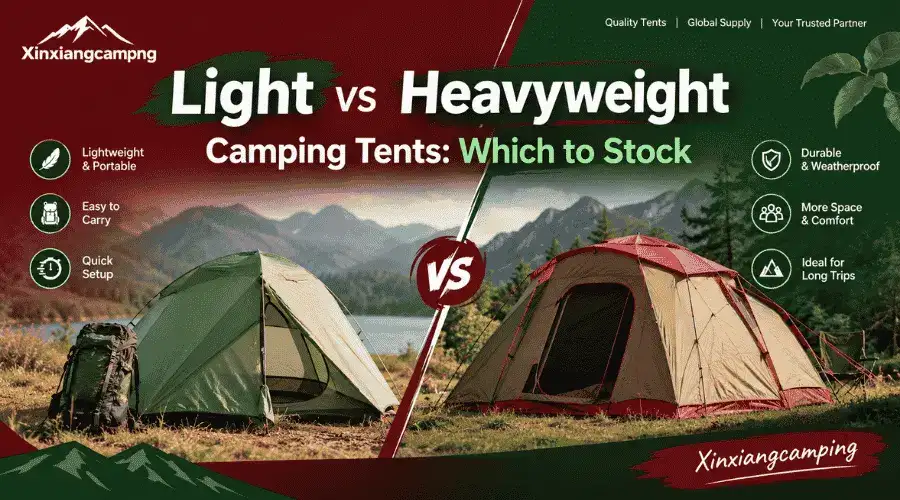
The decision you make regarding the tent can be a success or a failure of your camping experience. When you enter any outdoor store, you can find dozens of choices on the shelves. Others are light as pillows, and others are so heavy that you can get some exercise transporting them to your car. Which type is more appropriate for you?
This is a question of the type of camping you plan to engage in. We shall break down the differences between lightweight and heavyweight tents before you make the right decision on the next outdoor activity.
Request a Wholesale Quote on Our Camping Tent Products
What are lightweight and Heavyweight tents?
The primary distinction is the weight and materials that were used to construct the tent. Light tents range in weight from 2 to 4 pounds for single or two-person tents. They employ light fabrics, aluminum poles, and a few stakes. All this is aimed at reducing weight.
The weight of heavyweight tents varies between 8 and 20 pounds, or more. They have heavier materials, steel or fiberglass poles, and are more solidly built. The additional weight is added by the stronger material and increased features.
Why Choose a Lightweight Tent?
There is a reason why lightweight tents have been popular. When you are on foot to your camping site, every gram counts. It is extremely different to pull a 3-pound tent on a trail when you have to climb a mountain and drag a 15-pound one.
These tents are small in size, thus easy to carry in a backpack. They can be packed away in a corner and do not take half of your storage space. This gives additional space for food, clothes, and other equipment you require.
New lightweight tents are very tough despite being made of very lightweight material. Manufacturers employ superior fabrics that tear easily and can withstand bad weather to a certain degree. You do not need to sacrifice all durability to save on weight.
When Is a Lightweight Tent the Only Option?
Lightweight tents are handy for backpacking trips. When you have all those things to carry around on your back for miles, you will be happy to lose every pound. Mountain hikers and campers who change sites often can carry lighter tents.
These tents should be considered by solo campers or couples who do not need to move fast but travel light. They are easy to put up, and this is good when you reach the camp exhausted and hungry. The minimalist design requires less time researching poles and finding instructions.
Lightweight tents are also ideal for warm-weather camping. The tents are frequently well ventilated with mesh panels that keep you cool at night when it is hot. They are made to work three seasons, hence spring, summer, and fall in most locations.
What Are the Downsides of a Lightweight Tent?
There are trade-offs to lightweight tents. Light materials fail to withstand the extreme conditions as well as heavier materials do. Powerful winds can indeed push a tent of light material to the limit. Totally, heavy rains may penetrate the fabric with ease.
Lightweight tents are perceived as tighter in space. Manufacturers reduced the interior room to save on weight. You may be too tall or feel you need room to stretch. Storage pockets are reduced to a minimum or omitted.
The price may be shocking as well. High-quality lightweight tents are made with costly materials and construction techniques. A lightweight tent can cost two or three times as much as a heavier tent of the same size.
What Are the Advantages of a Heavyweight Tent?
The heavyweight tents provide good protection against the weather. The bulkier ones cover the wind better, and they offer greater protection against the cold. These tents hold up during heavy downpours, snow, and harsh weather, which would be hard on a lightweight model.
Plenty of space is a great benefit. Heavyweight tents usually weigh more on the ceilings and the floor area. You are free to sit up straight and pack your equipment without feeling like a bag of cocooned sleep.
Such tents tend to have greater features. An additional pocket to hold the gears, muddy-boot vestibules, additional doors for easy access, and enhanced ventilation systems reduce weight while increasing comfort. These amenities make family camping a lot easier.
Where Heavyweight Tents Make Sense
Heavyweight tents are ideal for car camping. The weight doesn't matter much when you can park close to your campsite. There is no need to worry about every pound; choose a tent that is comfortable and has everything you need.
Families would also require the additional space that heavyweight tents would offer. Children, animals, and all the equipment involved in taking their family camping must have space to breathe. A heavy 6-man tent can weigh 20 pounds, yet still make a comfortable base camp for all.
In winter camping, it is necessary to stay warm with heavyweight tents. Extreme cold and snow tents are four-season tents that are constructed with robust materials and powerful poles. The additional weight directly contributes to safety and warmth in situations where temperatures are below freezing.
Base camp activities are also compatible with heavyweight tents. When you are setting up your tent in one place for a few days or even a week, you want a tent that feels like a real home. When it is not moved around, the weight does not matter.
What Are the Drawbacks of a Heavy Tent?
The apparent issue is portability. Anyone who carries a tent weighing 15 pounds will soon get tired of the weight. Every extra pound will be a reminder on your shoulders and back. It is tiring to walk for more than a short distance while carrying a heavy tent.
The heavyweight tents take longer to set up. Additional poles, stakes, and fabric require more time to assemble everything. You may not want to take 20 minutes of your time to go and set up camp after a hard day.
There is a need for additional storage and transportation space. These tents do not compress well, so a lot of space is taken up in your car or garage. A large tent is impractical in the absence of storage space.
How Does Your Camping Style Affect Your Tent Choice?
The issue of how you camp is always a matter of decision. Ask yourself a few questions. Do you walk or drive to your camping sites? Are you camping solo, with a spouse, or with a complete family? How are you going to fall apart in terms of weather conditions?
Weekend warriors who go camping twice a year do not have the exact needs as people who go on long-distance hiking on hundred-mile trails. An example of camp equipment required by an infant-and-toddler family in a developed campground differs from that needed by a lone hiker in deep wildlands.
Consider the seasons you likely go camping in. When you do not go out in bad weather, you can get along with a light tent. Cold-weather campers require the additional protection that a heavier building offers.
Is There a Middle Ground Between Light and Heavy Tents?
Some tents range from ultra-light to heavyweight. These midweight typically range from 5 to 7 pounds in the two-person models. They provide an acceptable life with no back killing on the trail.
These compromise tents are used by individuals who car camp and occasionally backpack. You also have an extra feature over an ultra-light tent, yet you can still control the weight during shorter trips. It is a convenient option if you plan to use a single tent in various camping modes.
How Do You Choose the Right Tent for Your Trip?
The first step is to be frank about your actual camping practices, rather than what you think you will do later. The majority of individuals underestimate the amount of backpacking they will do and overestimate the amount of car camping they will do.
Budget matters too. You can decide how much you can spend, then find the best tent for that amount. It is at times better to purchase a heavyweight, high-quality tent you do use than a lightweight, costly one that sits in your closet.
Check the reviews of people who camp the way you want to. A hiker of the Appalachian Trail will not have the exact needs as a state park worker camping with his family. Identify reviewers with similar camping styles.
Conclusion
Lightweight and heavyweight tents are not entirely superior. It is a matter of right or wrong depending on the circumstances. The ideal tent should be one that suits the style of camping; it should be on a budget; and it should get you excited to spend time outside.