.jpg)
Blogs
Moon Chair Manufacturing for Camping & Outdoor Business
Moon chairs have quietly become a top selling product in the outdoor or camping category. They look playful, but they sell for serious reasons: comfort, portability, and a “try it once, want it everywhere” effect that keeps turning up in carts. If you supply camping retailers, outdoor event operators, glamping sites, or patio-focused stores, moon chair manufacturing isn’t a side story. It’s a margin lever.
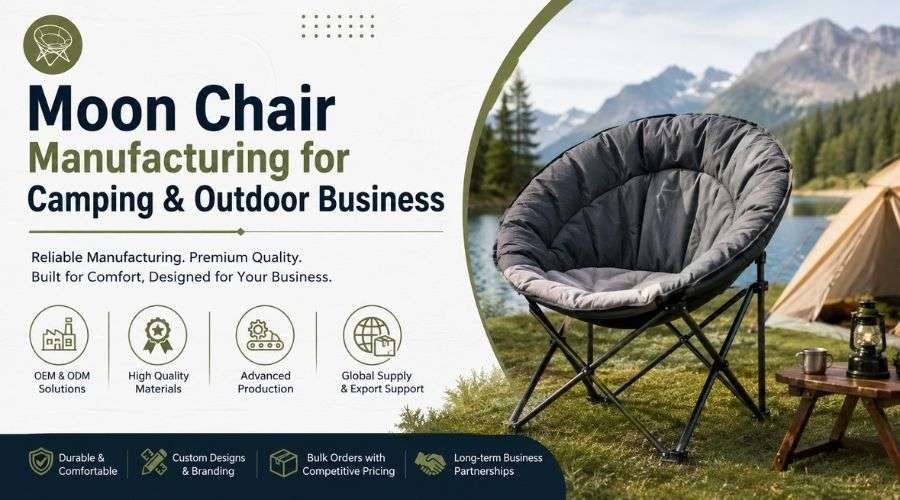
A moon chair is a low-profile, lounge-style chair built around a rounded seat that cradles the body. It’s designed to feel less like sitting on a traditional chair and more like sinking into a supportive cushion except that it lacks the bulkiness of a full lounge chair. its basic structure consists of a tubular frame plus a suspended fabric seat. Simple architecture. High expectation.
Unique circular or saucer shape
The signature “saucer” shape widens the sitting area and distributes pressure across the back and hips. That shape is not just aesthetic. It’s a comfort strategy, and it’s why customers often describe moon chairs as instantly relaxing. The chair looks like a circle. And sitting in the chair feels like you are sitting in a cozy place.
Request a free quotation for custom Moon Chair Manufacturing tailored to your brand and target market.
Foldable and portable structure
Most moon chairs use a folding X-frame or scissor-style structure that collapses into a compact profile. Portability is the point. Buyers love this foldable mechanism as this chair can be effortlessly carried to all kinds of places: campsites, festivals, beaches, and backyards without any hassle or struggle. If folding feels sticky or awkward, then it is more of a quality issue rather than a manufacturing design issue.
Why it is popular for outdoor comfort
Most outdoor seating fails at key aspect: being comfortable after 30 minutes. Moon chairs win in this aspect because they reduce pressure points, flex according to the sitter’s weight and remain stable even when users shift positions. Comfort is their main selling point.
Growing Demand for Moon Chairs in the Outdoor Market
Increase in camping and glamping trends
Camping has expanded beyond hardcore outdoor enthusiasts. Glamping and comfort-first camping have given rise to new customer segments into the market. These new buyers are families, couples, and casual weekend travelers. These people prioritize convenience the most. Moon chairs fit that shift perfectly. They upgrade the campsite experience in one purchase.
Outdoor festivals and events
Festivals, concerts, and outdoor sports events are all high-selling seasons for portable seat retailers. When venues allow chairs, buyers want something better than a flat folding chair; something they can settle into for hours. Moon chairs deliver that with an innovative seat design that promises comfort for extended periods.
Backyard and patio usage
Not every moon chair is used for camping trips. Many users prefer to sit in the chair while lounging at their patios, balconies, lawns. Since these chairs are easy to store and quick to unfold they become much more adaptable for various locations. The same chair can serve outdoor recreation and home leisure. You do not get that sort of versatility with an ordinary chair.
Travel and adventure tourism growth
Adventure tourism is expanding globally and people want gear that packs small and sets up fast. Moon chairs feel like a low-risk upgrade. And for retailers this chair category also delivers repeat purchases as well.
Market Opportunities for Retailers and Distributors
Moon chairs often trigger repeat purchases because households want multiple units. One for each family member. One for the car, one for the patio etc. Seasonal spikes in demand can be really profitable. But to take maximum advantage you have to plan inventory early rather than chasing replenishment mid-season. These chairs are easy to transport as they are lightweight, compressible, and easy to stack. That’s where distributors win. They fcan handle demand without spending their budget in costly transportation.
Benefits of Moon Chairs for Camping and Outdoor Use
Superior comfort and support
The rounded seat geometry supports a relaxed posture and reduces the “hard edge” discomfort common in basic camp chairs. A good moon chair can feel supportive without feeling stiff. Comfort isn’t a feature. It’s the reason buyers justify the price.
Easy setup and folding
The best models open smoothly, lock confidently, and fold down without wrestling. Setup speed matters because customers use these chairs in real life—often in wind, in dust, in a crowded campsite, with tired hands. Ease is what makes a product feel premium.
Lightweight portability
A moon chair that’s heavy becomes a garage chair, not a travel chair. Buyers want something they can carry from trunk to site without resentment. Weight is a selling point. And a deal-breaker.
Space saving storage
The folding mechanism is a specialty that makes storage effortless anywhere. That is another reason why this chair tops the sales and is popular with a broad range of audience like homes, apartments, and travel setups where storage is limited.
Suitable for all age groups
Moon chairs appeal across age ranges because the seating posture feels relaxed and the surface area is forgiving. Families like them. Older buyers like them. Teenagers claim them instantly. When a product pleases multiple demographics, it moves faster. It also reduces the risk of dead inventory.
Moon Chair Manufacturing Process Explained
Frame Fabrication
Frame manufacturing starts with material selection and tube forming. Steel is common for strength and cost control, while aluminum is used when weight reduction is a priority. Tubes are bent to precise angles so the chair opens smoothly and sits evenly.
Welding quality is kept flawless as weak welds don’t fail politely. They fail loudly, and they damage your brand in one moment. A rust-resistant coating or paint system follows, often powder coating for durability. Outdoor exposure is unforgiving: humidity, salt air, rain, and dirt will find any weakness.
Fabric Selection and Cutting
Fabric choices typically include Oxford fabric, polyester, or canvas-based blends. Oxford and polyester are popular for their balance of toughness, weight, and cost. Canvas can signal a more premium feel, but it must be treated properly for weather resistance.
Coatings matter. Water resistance and UV stability aren’t luxuries in outdoor goods. They are the difference between a product that survives a season and one that disappoints mid-summer. Cutting must be consistent to avoid uneven tension when the seat is mounted. Poor cutting leads to wrinkling, sagging, and premature seam stress.
Cushioning and Padding
Padding can transform perceived value. Foam density and thickness determine whether the chair feels plush or flat. Cheap foam compresses fast and stays compressed—customers feel that decline and lose trust. Stitching and reinforcement are where longevity is decided. Stress points must be reinforced to resist tearing when users drop into the chair, twist, or sit off-centre. A chair can look perfect on day one. Then the seams reveal the reality when cushion quality erodes.
Assembly and Folding Mechanism
Assembly combines the frame, joints, fasteners, and the folding mechanism. Lock systems should engage cleanly and hold securely without creating pinch hazards. Mechanism design should prioritize stability and ease of use. Durability checks during assembly catch misalignment, unstable feet, and hardware issues before they become returns. This is not where you “hope the batch is fine.” You verify.
Quality Testing
Weight capacity testing validates frame strength, joint durability, and fabric integrity under load. A stated capacity must be real, repeatable, and defensible. Otherwise, you inherit risk. Stability and safety inspections focus on tipping resistance, foot grip, locking reliability, and consistent geometry. Outdoor terrain is rarely level, so stability must tolerate imperfect conditions. A strong test regime doesn’t slow your business. It protects it.
Moon Chair Wholesale and Bulk Buying Benefits
Reduced per unit cost
Bulk pricing gives you room to compete without sacrificing quality. It also improves resilience when freight rates fluctuate or when you need to run promotions without erasing margins. This is where procurement stops being reactive and becomes strategic.
Better profit margins
Lower unit cost creates margin flexibility across channels—retail, online, and B2B resale. You can price confidently, protect brand positioning, and still have room for seasonal offers. Margins aren’t just numbers. They’re breathing space.
Faster stock availability
Wholesale planning typically improves lead-time control because production slots are reserved earlier. That means fewer out-of-stocks during peak demand and less panic-buying from backup suppliers. The market punishes empty shelves. Quietly. Relentlessly.
Ideal for retailers and distributors
Moon chairs are easy to merchandise and easy to explain. The comfort story sells itself when customers see and touch the product. For distributors, the category offers repeatable demand, manageable shipping, and strong seasonal velocity. It’s a practical product with emotional appeal. That combination moves volume.
Seasonal inventory planning
Buying in bulk supports disciplined seasonal builds: spring ramp, summer peak, late-season clearance planning. You can plan assortments by color, fabric grade, and capacity rating instead of accepting whatever is available last minute. Inventory isn’t “stock.” It’s leverage.
Common Mistakes Businesses Should Avoid
Choosing low quality materials
Low-grade tubes, thin coatings, and cheap fabric create a short-term cost win and a long-term brand loss. The returns show up first. Then the terrible reviews. Outdoor buyers are forgiving about dirt. Not about failure.
Ignoring weight capacity
Weight capacity is not a marketing line. It’s a safety claim. If capacity is overstated, you inherit reputational and liability risk, and you invite channel conflict when retailers face complaints. Specify realistically. Test aggressively. Document everything.
Ordering without samples
Skipping samples is how businesses buy surprises: wrong feel, wrong color tone, stiff folding, unstable feet, scratchy fabric, inconsistent stitching. A sample review saves money because it prevents a batch mistake that can’t be “explained away.”
Not checking certifications
Depending on your market and channel, compliance expectations may include chemical restrictions, flammability considerations for certain environments, and general product safety documentation. Even when not legally required, certifications can become a retailer requirement. If you can’t prove it, you can’t scale it.
Poor supplier communication
Vague specifications lead to vague outcomes. Misunderstandings about fabric weight, coating type, weld standards, packaging, labeling, and tolerance ranges create inconsistent product and inconsistent customer experience. Clarity is a cost saver. Silence is expensive.
Strong branding
Many businesses treat moon chairs as generic. That’s a mistake. Colorways, stitched labels, hangtags, packaging quality, and consistent photography turn a commodity into a brandable product. Branding doesn’t just attract buyers. It defends price.
Conclusion
Moon chairs deliver that perfect balance of comfort and convenience, and that intersection is where the outdoor market is heading. For camping, festivals, travel, and backyard life, the demand is broad and durable. Treat moon chair manufacturing like a system: materials, mechanism, testing, and procurement strategy aligned to your channel. Do that, and the product won’t just sell. It will earn repeat business and protect your reputation while it does.
Frequently Asked Questions (FAQ's)
What makes a moon chair different from a regular camp chair?
A moon chair is wide and round. It holds your back and hips in one soft pocket. A standard camp chair sits you upright. This one lets you sink in. Comfort wins.
Which frame material is better for outdoor buyers: steel or aluminum?
Steel is strong and cost-friendly. It also weighs more. Aluminum is lighter and easier to carry. It can cost more. Choose steel for value lines. Choose aluminum for travel-focused lines.
What fabric should I specify for wholesale moon chairs?
Start with Oxford or polyester. They handle wear and pack down well. Add weather coating for rain and sun. Ask for reinforced seams. Fabric fails first when corners get cut.
What should I check before placing a bulk order?
Test a sample. Open it and fold it many times. Sit in it and lean back. Check welds, stitching, and the lock feel. Confirm the weight rating is tested, not guessed. Then order.