
.jpg)
Blogs
Moon Chair Size Guide: Standard vs Oversized Moon Chairs
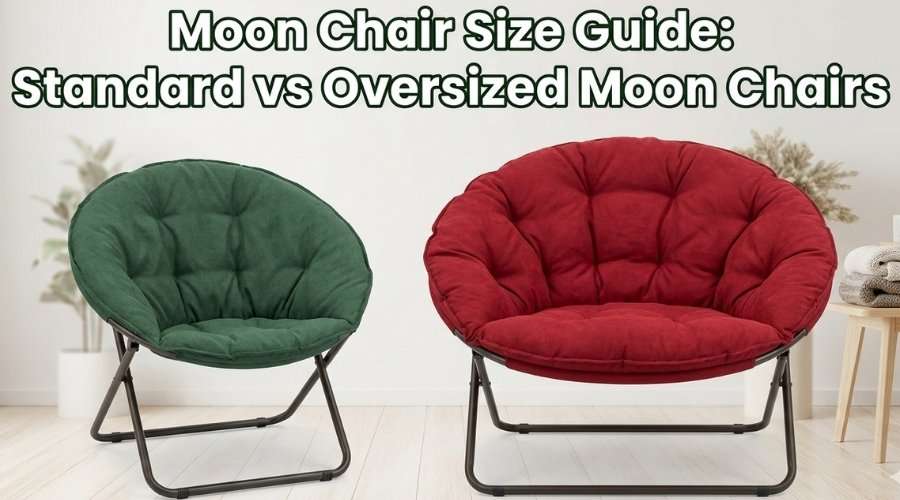
Moon chairs sell a promise: relaxed, cocooned comfort with a sculptural profile. For interior designers, that promise of comfort is only relevant if the scale is right and the wrong scale becomes a daily annoyance; too tight to lounge, too bulky to live with. Size is not a footnote here. It’s the decision.
“Standard” and “oversized” labels are inconsistent across brands, moreover the same chair can feel different depending on cushion fill, frame angle, and base style. Consequently, a spec that looks fine on paper can read clumsy in the room, or unexpectedly petite once staged beside a sectional.
This guide treats sizing like a small design system. You’ll focus on the few measurements that actually govern comfort and footprint, then translate them into room planning and user fit. Above all, you’ll stop buying by category name and start buying by usable space.
How Moon Chairs Differ from Traditional Camping Chairs
What Defines the Shape?
A moon chair is essentially a shallow bowl for the body. That bowl can be taut and sling-like, or plush and upholstered, yet the geometry stays similar: a wide rim, a deep seat pocket, and a reclined sitting angle. That’s why two chairs with the same overall width can feel radically different. The “cradle” depth and the back rake do most of the work.
Get Wholesale Moon Chair Deals Direct from the Supplier
Frame style quietly changes the read. Exposed metal tubing typically feels lighter and visually smaller, unless the base is wide and flat. Fully upholstered models add bulk and soften edges, furthermore they visually expand the chair even when the measurement stays the same. Swivel bases increase functional footprint because they demand rotational clearance, nevertheless they can reduce the need to “pull out” the chair for entry.
Designers should also note where the rim sits relative to the sitter’s shoulders. When the rim lands high, clients interpret it as a lounge chair; when it lands low, it reads more like casual occasional seating. Different vibe. Same category.
Key Dimensions to Compare Moon Chair
Width and depth
Start with overall width and depth, because these determine whether the chair physically fits and whether circulation survives. Then pivot to usable seat width and seat depth, which are the real comfort drivers. People don’t sit on the frame diameter; they sit inside the cradle.
Seat height
Seat height matters more than most people expect. A low seat height lends a modern touch to any space and is really great for lounging. But the downside is it can be harder to get up from the seat for older buyers or anyone with knee issues. Seat depth is the next lever. Deep seats invite curling up, unless the user is petite, in which case the back support can feel too far away.
Back height
Back or rim height affects posture. Higher rims support shoulders; lower rims keep the silhouette open and airy. If the chair swivels, then you must take into account the required clearance according to base diameter. Also confirm weight capacity, but treat it as a safety spec, not a comfort proxy.
Moon Chair vs Camping Chair: Which Outdoor Chair Is Better?
Standard vs Oversized: Typical Size Ranges
The “standard” size of a moon chair is basically a chair that is designed like a single lounge seat and fits well in bedrooms, smaller living rooms, and apartment corners. In such spaces you need softness without excessive floor occupation. The comfort profile tends toward upright lounging, with enough depth to relax but not so much that you disappear into it.
“Oversized” chairs have a different kind of purpose. The chair is built for long seated durations like sprawling, curling, reading, gaming, and movie nights. Consequently, it often becomes a primary seat rather than an accent. Oversized pieces usually come with thicker cushions and a wider rim, which increases perceived mass. That can be a feature in a large room, nevertheless in a compact space it can feel like a beanbag with a mortgage.
The standard and oversized versions discussed here are approximate and nit accurate. This is because manufacturers vary, and upholstery thickness changes usable dimensions. A plush “standard” can sit like an “oversized” once compressed, furthermore a slim “oversized” can feel less generous than expected. The right move is to compare a short list of measurements across brands, then choose based on the room’s tolerance and the user’s posture habits.
Comfort Focused Moon Chair Selection Tips
Choosing the Right Scale for the User
Comfort is mostly about where the body lands in the cradle. Taller clients typically need enough seat depth so the knees aren’t lifted uncomfortably, and enough rim height to support upper back and shoulders. For them, a shallow standard can feel perched, consequently they’ll migrate back to the sofa. Petite clients often have the opposite issue: too much depth pushes the lumbar away from support. In that case, an oversized chair can still work, unless you plan for a lumbar pillow and a smaller throw to “bring the seat forward.”
Moon Chair Guide: Ideal for Backyard Relaxation and Beach Trips
Consider how the client actually lounges. Cross-legged sitters love generous seat width and a forgiving rim. Side curlers want a deep pocket and soft arm support. If the chair is intended for conversation rather than solo lounging, a slightly higher seat height and less recline will keep posture engaged.
Cushioning changes everything. Down-blend and fiber fills compress and “grow” the usable seat over time, moreover they can make seat height lower than expected. High-density foam holds shape and reads cleaner, but can feel firm. Your best strategy is to match fill to lifestyle, then size to body. Don’t reverse it.
Key Factors for the Best Moon Chair Fit
Room Layout and Clearance Rules
Place the chair in plan as a footprint plus a comfort halo. The footprint is the base and the maximum outer edge; the halo is the clearance needed to approach, sit, and use it without collision. A non-swivel moon chair still needs room for knees to enter and for a user to shift. A swivel model needs rotational clearance, consequently the “working diameter” is often larger than the catalog footprint suggests.
In tight floor layouts, emphasis should be on freedom of movement for the inhabitants. If traffic squeezes past the rim, the chair becomes a permanent obstacle, In open floor layouts, oversized models can anchor a nook and create a cozy space. This space can be further enhanced by pairing the chair with a side table that complements the rim height. Table reach matters. Too low and it’s decorative; too high and it feels like a desk.
Lighting also interacts with size. A larger chair creates a taller visual mass and needs either a floor lamp positioned outside the halo or a wall-mounted solution. Additionally, consider sightlines. Oversized chairs can block views to fireplaces or TVs if placed too centrally. Use them as edge anchors, not center barricades.
Materials and Visual Weight
What Makes a Chair Look Bigger (or Smaller)
Perceived size is linked with the chair design. A teddy, boucle, or faux fur upholstery adds visual volume, and makes the chair appear larger than its measurements. But a minimalistic moon chair has tightly woven leather that keeps edges crisp, so even if size is same the effect is a compact and sleek moon chair. This is why an “oversized” in a fluffy fabric can dominate a room while a similar dimension in leather feels controlled.
Frame visibility matters. Exposed metal frames create negative space and make the chair lightweight unless the tubing is thick and highly contrasted. Fully upholstered bases hide the structure and increase the monolithic effect. Swivel disc bases look modern and grounded, but they also enlarge the perceived footprint because the base is continuous and obvious.
Color and pattern also play a role. Dark solids compress form and can make an oversized chair feel less intrusive. Light solids expand it. Large-scale prints emphasize surface area, furthermore they draw attention to the chair as a focal point even when the intention was supportive seating.
Finally, cushion thickness changes real dimensions. A thick cushion raises the sitter but can reduce usable depth once compressed. Always interpret specs through material reality. Fabric is geometry in disguise.
Matching Moon Chair Size to Your Body Type
Standard vs Oversized in One Fast Pass
Choose standard size: When the chair’s job is to complete a composition without competing with the main seating. It’s ideal for bedrooms, small living spaces, and projects where you need flexibility for future moves. Standard also helps when you’re designing for frequent reconfiguration, because it’s easier to shift, rotate, and re-style.
Choose oversized: when the chair is meant to be a destination. Media rooms, reading corners, and family rooms benefit because the comfort is immediate and the scale signals “stay awhile.” Nevertheless, oversized only works when the room can absorb it without strangling circulation. If the chair forces furniture to pinch inward, the entire layout will feel tense.
When you’re uncertain, mock the footprint and the clearance. Use painter’s tape for the base and a wider ring for the halo, then live with it for a day. Walk past it. Sit where it will go. Consequently, you’ll learn quickly whether you’re buying comfort or buying regret.
One more filter: if the user curls up daily, go bigger; if the chair is occasional, stay controlled. Strategy beats trend.
Conclusion
A moon chair is a simple object with complex outcomes. When it works, it becomes the seat everyone claims first. When it doesn’t, it becomes the oversized sculpture nobody uses, quietly collecting throw blankets like trophies. Your playbook is straightforward. Start by separating overall dimensions from usable seat dimensions. Then interpret seat depth, rim height, and seat height through the actual user’s posture habits. Moreover, plan for clearance as a functional halo, especially with swivel bases and deeper lounge angles. After that, bring materials into the decision because upholstery thickness and texture change both comfort and perceived scale.
For designers, standard sizing usually supports balance and flexibility, unless the chair is intended as a primary anchor. Oversized sizing delivers destination comfort, consequently it should be deployed where the room can give it air. Above all, ignore category labels and read the measurements like a plan, not a brochure. Document your chosen dimensions in your spec template so future projects start from a proven baseline. Consistency makes you fast.