
.jpg)
Blogs
Types of Packing Cubes: Materials, Sizes, and Use Cases Explained
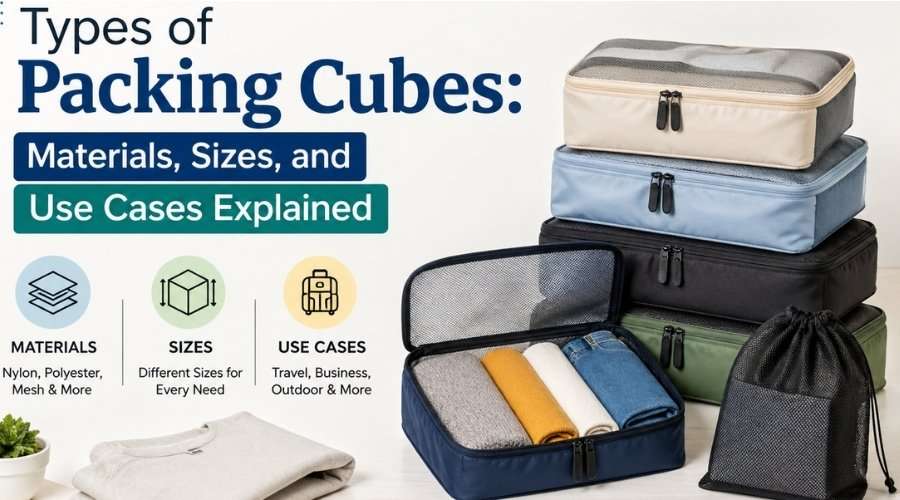
Packing a bag sounds simple. Still, every person who ever had a hard time finding a single sock in his untidy suitcase feels some pain. Things shift during travel. Clothes get wrinkled. Small objects get lost behind large objects. Packing cubes come in at this point.
They are not a new invention. They have been in use by frequent travelers for many years. However, in recent years, their use has been increasing among weekend travelers, hikers, parents traveling with kids, and business travelers. The reason is simple, they work. This is the guide on everything you should know about packing cubes. The materials in which they are composed. The sizes available. And what kind of travel should have what type?
Why People Use Packing Cubes
It is better to first realize the importance of such small pouches before moving on to the types.
Upgrade your packaging strategy with durable packing cubes
When you do not use cubes, everything in your bag becomes loose. A T-shirt is put beside a charger. Socks mix in with toiletries. Every time you want something, you draw out things and thrust them in. Within less than 24 hours of a journey, the bag seems like a mini-disaster.
Cubes prevent that. Each cube has a given category. One for tops. One for bottoms. One for underwear and socks. You pull out the cube you need. All other things remain intact. They are also faster at unpacking. At a hotel, everything can be dragged out of each cube and put into a drawer in seconds. There is no necessity to spend the entire trip with a disorganized bag.
The Materials: composition of packing cubes
A packing cube has an influence on the weight, durability, and usefulness of its material. Here are the main types:
Nylon
Many people prefer nylon packing cubes. It is lightweight. It is strong. It is not water-absorbent, and therefore it dries quickly when wet. The vast majority of mid-range and high-end packing cubes are fabricated of nylon. It handles daily use well. The cloth is not easily torn and maintains its shape over time. When you commute and wish to spend money on something durable, then nylon is your thing.
Polyester
Polyester resembles nylon, only it is a bit heavier. It is also less expensive. A large number of budget packing cubes consist of polyester. They work effectively without being costly. The disadvantage is that polyester may be rather stiff. It also dries more slowly than nylon. However, polyester cubes are a good choice in case of occasional travelers or an extremely tight budget.
Mesh
Mesh cubes are somewhat different. They are typically composed of one solid fabric side and one open-mesh side. The mesh lets you take a look at what's inside, even without unzipping anything.
This is what makes mesh cubes ideal for grabbing stuff when in a hurry. Consider chargers, earphones, a little accessory, or snacks. They cannot hold large, rigid objects well because the mesh is less supportive. However, they are convenient, small, and flexible.
Compression Material
The secondary zipper is made on compression cubes. On unzipping, the cube folds up and releases air. This ultimately reduces the amount contained. These are constructed from heavier, more textured fabric. It has a hard outer shell with the contents pushed inside. Compression cubes come in handy when one has garments such as sweaters, jackets, or hoodies. They will let you carry more in your bag without having to carry a bigger one.
Cotton and Canvas
Cotton and canvas cubes are rare. They have a natural, soft look. They are breathable, which would leave clothes fresh inside. The main downside is weight. Synthetic materials are lighter than cotton and canvas. These are not the best if you do not want to carry a heavy bag. However, when breathability is an issue, then they can be considered during longer trips.
The Sizes: Simplifying It Step by Step
There are various cube packaging sizes. The majority of them are small, medium, large, and extra-large. The following is the size of each size:
Small
Small cubes measure approximately 10x 7 inches. They do well with socks, accessories, and small-scale electronics. They can also be used as an addition to a larger bag to help organize the remaining space.
Outdoor Tent Camping Checklist for Safe and Comfortable Trips
Extra small cubes in a couple may suffice, especially when you are traveling on a brief two-day trip. They also come in handy as accessories in a larger bag, tidying up the remaining space.
Medium
Medium ones are approximately 13 x 9 inches. These are the most versatile. They have in their hands a few crumpled T-shirts, a pair of jeans, or a combination of light clothes. The majority of travelers create their system by means of medium cubes. One equipped with tops, one with bottoms, one with sleep clothes. They are easy to carry in baggage and can even work in checked bags.
Large
Large cubes measure approximately 17 by 12 inches. They are constructed for larger goods. The jeans, trousers, oversized tops, and various items fit perfectly in a huge cube. These are effective in checked baggage. Most of the carry-on bags cannot accommodate them. Large cubes are used to keep everything clustered, not random, when you are going on longer trips and need a wider variety of clothes.
Extra-Large and Slim
Extra-large cubes are used when the winter gear is a large one or when two people share a bag. They can hold as well as occupy a lot of space. The opposite are slim or flat cubes. They are thin and flat. They suit perfectly well the work of documents, a tablet, a travel journal, or anything that should remain flat and easy to retrieve. A small cube that fits on the top of your bag will make sure that you have your passport and papers whenever you need them.
Use Cases: Which Type Works best for You
Now comes the practical part. Traveling requires different cubes depending on the type of traveling.
Explore High-Quality Pop-Up Tents for Camping and Outdoor Use
Weekend or Short Trips
A two or three-day trip is simple. It normally suffices to have a small cube and a medium cube. Short trips do not require compression and big cubes. Small- and medium-sized nylon or polyester will do all the work you need without making it complex.
Long and International Travel
Shorter journeys require a more comprehensive system. It is helpful to use a combination of medium and big cubes. To add more compression, wear heavier clothes such as jackets or thick sweaters. Sort according to category, tops on one, bottoms on another, sleepwear in third. This makes it very easy to live out of a bag for a few days.
Carry-On Only Travel
That is what compression cubes are good at. Space is everything when you are not allowed to check a bag. Compression cubes help to stuff more clothes into a smaller space. Smaller nylon cubes will contain accessories, and medium compression cubes will contain clothes. They are flat-packing and fit without a lump in a carry-on.
Outdoor and Hiking Trips
Weight matters most here. Choose light nylon cubes. The lighter, the better. Find waterproof products because the outdoor environment is dynamic. The electronic cube and the layer cube are good places to start with small and medium cubes, respectively. So leave the heavy canvas or thick compression cubes at home for hiking.
Family Travel
A family requires a different challenge of packing. The most convenient is the color-coding. Every member of the family receives a color. Blue cubes to one of the children, green to the other, red to the adults. You want something, you pick the appropriate color. No digging required. Polyester medium and large cubes are good in this, as they can be purchased cheaply and they last.
Business Travel
There are special requirements for business travelers. Official attire should remain wrinkle-free. Documents should be readily accessible. Slim cubes are perfect for pressed shirts and trousers. A few business-oriented cubes have internal dividers that keep clothes folded during transport. The most common business travel requirements are covered by a small mesh cube with cables and a slim cube with documents.
What to look out for Before You Buy
Packing cubes are not all the same. Here are some things to check before choosing a set.
• Zipper quality matters. The tearing or catching of a bad zipper occurs on the first few trips. Find methods of having double-pull zippers or YKK. These last much longer.
• Do not overbuy. Even a 10-piece set seems expensive. But most travelers use three to five cubes. Start small. You should put in more when you realize that you need them.
• Determine the weight of the cube itself. Some cubes are heavier than they appear. When you are traveling with weight restrictions, seek out ultra-light cubes. They are always composed of a thinner nylon and do not contribute much to the weight of your bag.
• Match cube size to bag size. A huge cube does not fit into such a tiny backpack. Measure up your bag before purchasing. Then compare it with the cube dimensions. This is just a tip that spares much of the frustration in the future.
Conclusion
Packing cubes are cheap to buy and a noticeable change to make. The correct material makes items light and sustainable. The correct size ensures no wasted space. And the correct use case fit will be that your bag no longer works against you.
There is no reason to restructure your entire packing immediately. Begin with two or three medium-sized nylon cubes. Watch them transform your travel. Most who adopt them stick with them. When you keep your bag tidy, trip after trip, it is difficult to revert to the old-fashioned way.
Important Resources
Visit our website to explore bulk outdoor camping Tent
Learn more about our expertise in bulk outdoor camping tent solutions
Reach out through our website to discuss your bulk outdoor camping tent